
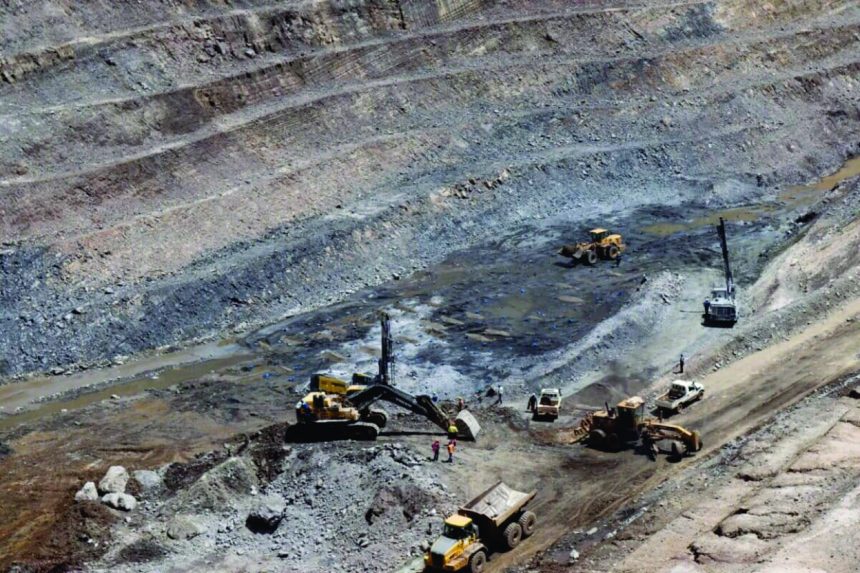
Virtus Minerals, a U.S.-based firm backed by the Trump administration, is inching closer to acquiring the assets of Chemaf, a troubled copper and cobalt miner that works in the southeastern Democratic Republic of Congo, according to media reports. If the deal is approved by the DRC’s state mining company, Gécamines, it would be one of the most significant acquisitions of extractive rights in the region by a U.S. corporation since the two countries signed a “strategic partnership agreement” for critical mineral access in December.
The agreement is part of a push by the U.S. to reassert itself in global critical mineral supply chains, which have been dominated by Chinese firms in recent years. At a diplomatic summit convened by the U.S. in February, Secretary of State Marco Rubio said that securing access to those minerals was a “priority for this administration at the highest order.”
With its vast reserves of cobalt, copper, tungsten and other minerals that are vital to advanced industries like artificial intelligence and clean energy, the DRC is center stage in this effort, and has been a recent focus of the Trump administration’s foreign policy in Africa.
The partnership agreement was announced in Washington just a day before a ceremony was held at the White House between DRC President Félix Tshishekedi and Rwanda’s Paul Kagame to cement a U.S.-brokered peace deal between the two countries. In his comments at the event, U.S. President Donald Trump made it clear his administration’s involvement in the deal — which has so far failed to end the fighting in the eastern DRC — was spurred by its interest in the region’s mineral wealth.
“We’re going to take out some of the rare earth, take out some of the assets and pay. Everybody is going to make a lot of money,” he said.
Critics have said the crisis is forcing the DRC to offer up its resources in exchange for security guarantees, with little in the way of environmental or human rights protections.
Virtus Minerals, which was founded by veterans of the U.S. military and intelligence services, has received strong backing from officials in charge of the Trump administration’s critical minerals policy, who reportedly consider the company’s bid an early test of President Tshisekedi’s commitment to the agreement.
On its website, Virtus describes itself as “the first major American-owned mining operation established in the Democratic Republic of Congo in more than a decade.” Earlier this month, while attending an event hosted by the U.S. Chamber of Commerce for Tshisekedi, Virtus CEO Phil Brown said that he had secured an agreement with shareholders of Chemaf to take over the company’s assets and liabilities.
The palace intrigue surrounding those assets predates the involvement of the current U.S. administration.
Chemaf’s Etoile mine currently produces around 20,000 metric tons of copper annually. The Dubai-based company’s as-yet-undeveloped Mutoshi deposits could eventually produce an additional 50,000 metric tons of copper per year, as well as 20,000 metric tons of cobalt, which would make it one of the largest cobalt mines on Earth.
In 2022, Chemaf received $600 million in financing from Swiss commodities trader Trafigura, but it put itself up for sale the following year after running into financial trouble.
Chinese state-owned defense company Norinco subsequently reached a deal with Chemaf in 2024 that would have settled Chemaf’s debts to Trafigura and other financiers. But the sale was immediately blocked by Gécamines, the DRC’s state-owned commodities and mining company that owns the mining permits leased by Chemaf.
In addition to its $1.4 billion cash bid, Norinco offered to raise the DRC’s stake in the Mutoshi and Etoile mines from 5% to as much as 15%, but Gécamines refused to approve the deal — reportedly after an intervention by the Biden administration.
The outlet Africa Intelligence reports that Virtus now has a signed agreement with Chemaf’s shareholders to take over the company’s assets and assume its debts. According to a nonbinding memorandum of understanding seen by the outlet, $600 million in financing to pay those debts would come from the U.S.-based metals and critical materials investor Orion Resource Partners, with another $200 million to come from Virtus along with India’s Lloyd Metals and Energy.
Orion Resource Partners is a key player in the U.S. attempt to secure critical minerals supplies for its domestic industries. Last year, the firm formed a joint investment vehicle called the Orion Critical Minerals Consortium (Orion CMC) along with Abu Dhabi’s sovereign wealth fund, ADQ, and the U.S. government-run International Development Finance Corporation (DFC).
The DFC is an investment arm of the U.S. government created during the first Trump administration. It “partners with the private sector to advance U.S. foreign policy and strengthen national security by mobilizing private capital across the world.” Each of the three partners of Orion CMC contributed $600 million to establish the $1.8 billion consortium fund.
For the deal between Virtus and Chemaf to go through, it will still have to be approved by Gécamines. The state-run firm did not respond to a request by Mongabay for comment, but early this week its CEO, Guy Robert Lukama, was ousted by Tshisekedi. Lukama was known to have opposed Virtus’s bid, but there are differing accounts of how much that opposition was responsible for his sacking.
If it is approved by Lukama’s successor, the deal will come with large question marks. Virtus’s leadership has decades of experience in the U.S. special forces and intelligence communities, but none in running complex mining operations at the scale that will be needed to develop the Mutoshi deposits.
Africa Intelligence also reports that the aggressive pressure campaign mounted by Trump administration officials on behalf of Virtus has not alleviated Tshisekedi’s concerns about its inexperience, and has created tensions within Gécamines.
The firm’s partnership with Orion Resource Partners would give it inroads into financing and support from the U.S. government through the Orion CMC fund.
Earlier this month, the fund announced that it had signed a memorandum of understanding with Switzerland-based commodities giant Glencore to acquire a 40% stake in the latter’s DRC assets.
Copper and cobalt mining can cause severe environmental impacts as well as health risks for people living nearby if waste is not properly managed.
In 2024, Mongabay visited the DRC’s copper belt, where the Mutoshi deposits and many of Glencore’s DRC assets are located, and found evidence that pollution from companies working in the area had seeped into waterways and farmland. A separate investigation by Mongabay in Uganda’s Ruwenzori district found that tailings runoff from an abandoned copper mine had led to increased rates of cancer in the region.
On its website, Virtus says it upholds the “highest environmental, ethical, and sustainability standards.” The company did not respond to repeated requests from Mongabay for comment on its proposed operations.
If the U.S. government-funded Orion CMC does provide cash to Virtus, its operations would be required to comply with environmental and social safeguards the DFC established in 2024.
Source: News.mongabay